Updated · Texas weather
Battery first
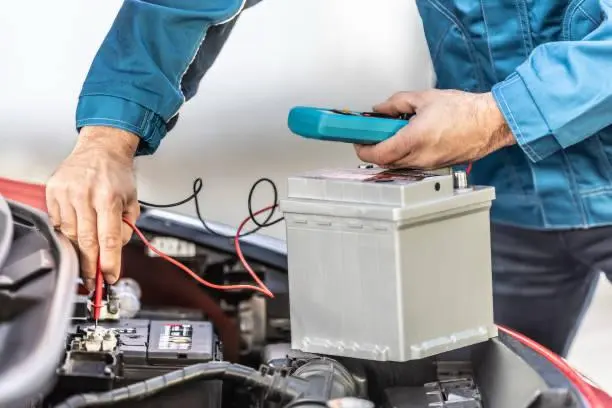
Cold slows the chemistry inside a battery, so it has less power right when a cold engine needs more to turn over. A battery weakened by the summer heat often makes it to winter and then quits on the first icy morning. If yours is a few years old, have it tested as soon as a freeze shows up in the forecast.
If the car clicks or cranks slowly in the cold, a jump start may get you going, but have the battery checked soon after.
Tire pressure drops with the temperature
Tire pressure falls as the air gets colder, roughly 1 psi for every 10°F. A sharp cold front can turn on the tire pressure light overnight. Check all four tires on a cold morning and fill them to the number on the sticker inside the driver's door, not the maximum printed on the tire.
If one tire keeps losing more air than the rest, the cold may be exposing a slow leak from a nail or a worn valve stem.
Fluids and wipers
A little prep here keeps you from driving blind on the first icy morning.
- Switch to washer fluid rated for freezing temperatures; plain water can freeze in the lines.
- Ask a repair shop to check the coolant mix if it hasn't been looked at in a while.
- Replace streaky wiper blades before a storm, not during one.
- Never run wipers that are frozen to the glass; loosen them first so the rubber doesn't tear.
Keep the tank at least half full
When ice shuts down roads, traffic can sit still for a long time, and the engine is your heater. The February 2021 storm showed how quickly ice can bring the whole region to a halt. Keeping at least half a tank through a freeze lets you wait in warmth and saves you from hunting for an open station on icy roads.
We don't deliver fuel, so filling up before the storm is the plan.
Ice on the car and on the road
Don't pour hot water on an icy windshield; the sudden change in temperature can crack the glass. Run the defroster and use a scraper instead. If a door is frozen shut, push firmly against it to break the ice around the seal before pulling the handle, and don't force a frozen lock with the key.
On the road, bridges and overpasses freeze before the pavement around them, which is why Texas posts signs warning that bridges may ice. Slow down well before you reach them, and avoid sudden braking or steering once you're on one.