Updated · Keys and lockouts
The call
Dispatch needs three things: where you are, what you drive, and where the key is. Give the year, make, model and color, and say whether the key is in the cabin, in the trunk, or lost. If a child or pet is inside, hang up and call 911 instead.
Before anyone heads your way, you'll hear the full total: the lockout service plus a one-time trip charge.
While you wait
Stay with the car, or somewhere close and safe where you can see it. Keep your phone charged and the ringer on, since the technician may call when nearby to find your exact spot. In a parking garage, note the level and section; in a big lot, a store entrance or a row marker helps.
Showing the car is yours
Before opening anything, the technician will ask for a photo ID. Once the door is open, expect to show the registration, an insurance card or another document that ties you to the car. The check protects you: nobody should be able to call a stranger to open your car.
If the car belongs to a parent, a spouse or an employer, say so on the call so dispatch can tell you what to have ready.
Opening the door
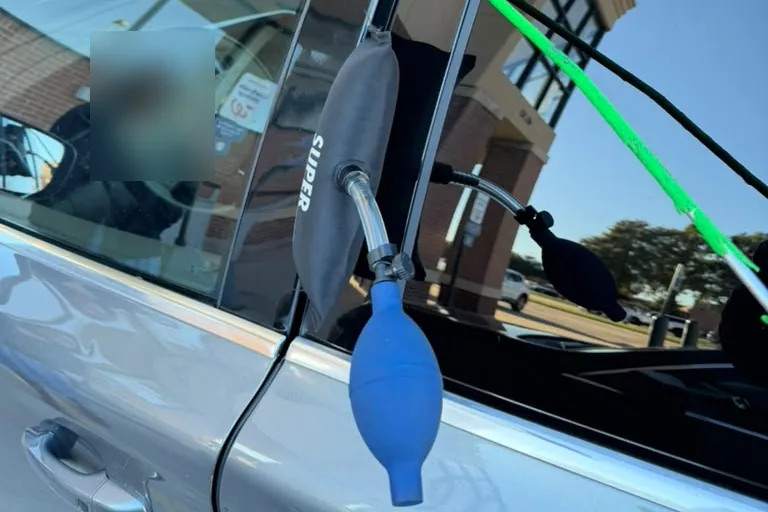
The usual method uses an inflatable wedge to make a narrow gap at the top corner of the door, then a long rod to press the unlock button or lift the inside handle. There's no drilling of the lock and no broken glass. Older cars with upright lock posts may be opened a little differently, but the idea is the same.
What a lockout doesn't cover
A lockout is about opening the car. If the key is lost, broken, or won't turn in the ignition, an open door won't get you driving; the next stop is a dealer or a locksmith that cuts and programs keys. We don't cut or program keys.
If the car won't start once you're in, the cause may be a weak battery. The technician can tell you whether a jump start or a new battery makes more sense.