Updated · Tires
Where the right number is
Open the driver's door and look for a sticker on the door jamb. It lists the cold pressure for the front and rear tires, and sometimes the spare. That's the number for your car.
The number molded into the tire's sidewall is the most the tire can hold, not what you should run. Filling to it gives a harsher ride and less grip.
Check it cold, once a month
Cold means the car has sat for at least three hours or been driven less than a mile. In summer, check early in the morning before the sun hits the car.
Pressure rises a few psi as tires warm up from driving and hot pavement. That's normal and already built into the door-jamb number. Letting air out of a hot tire leaves it low once it cools.
- Check all four tires and the spare once a month and before long trips
- Use a gauge, not your eyes; a tire can be well under pressure and still look normal
- Look over the valve stems, since rubber ones crack with heat and age
- Scan the tread for nails or screws while you're down there
Why low pressure is the real danger
An underinflated tire flexes more as it rolls, and flexing makes heat. On a long highway drive in July, with the pavement already hot, a low tire can build enough heat to separate the tread or blow out.
Low pressure also wears the outer edges, hurts fuel mileage and makes steering feel vague. Most tires lose a little air every month, so a tire that's slightly low today will be lower next month.
Cold fronts and the warning light
As a rule of thumb, tire pressure changes about 1 psi for every 10°F change in air temperature. When a strong cold front drops the temperature 20 or 30 degrees overnight, as North Texas fronts can, tires that were fine yesterday may be low enough to turn on the warning light.
That light comes on when a tire is about 25 percent below the recommended pressure. By then it's already well low, so don't wait for it.
If a tire keeps losing air
A tire that needs air every few days has a reason: a puncture in the tread, a cracked valve stem, or a leak where the tire meets the rim. Adding air buys time; it doesn't fix the leak.
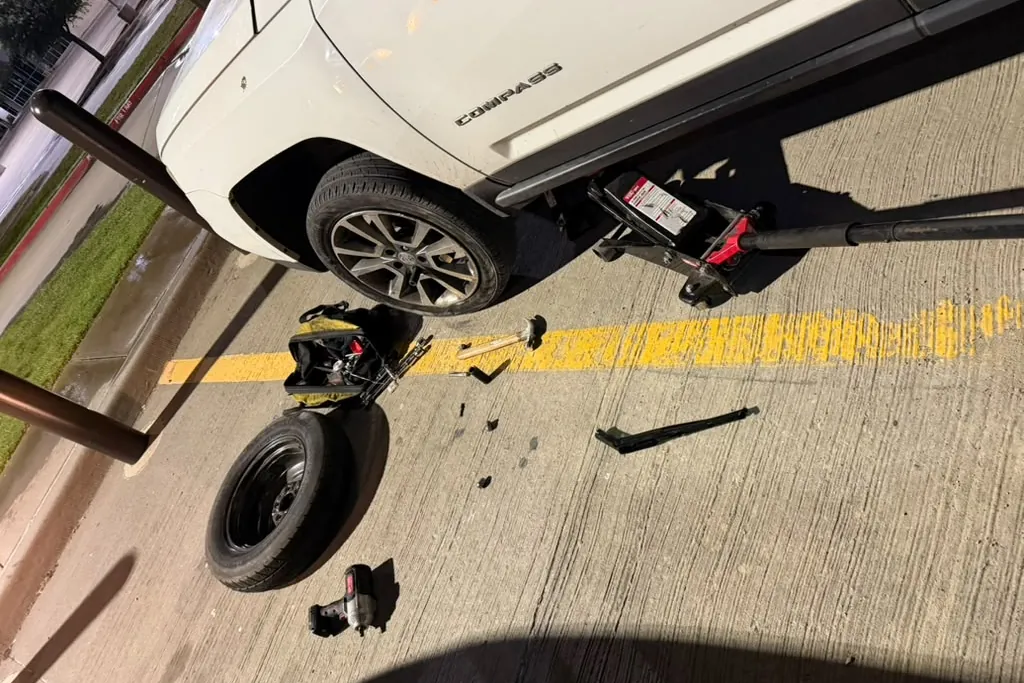
We find and repair punctures, replace leaking valve stems, and put on your spare when a tire is too far gone, anywhere in Dallas–Fort Worth, wherever the car is parked.