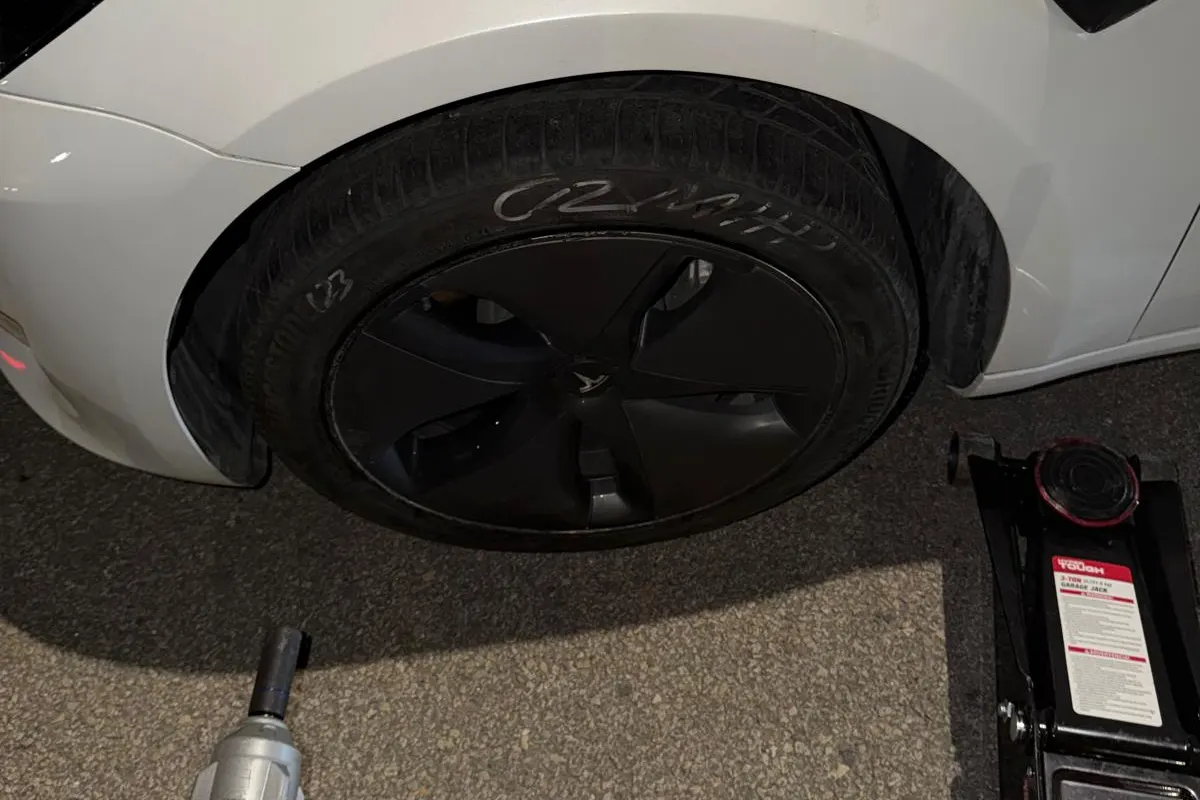
Screw in tire
Leave the screw in and check the pressure; its threads often hold air for a while, but the tire still needs fixing soon. If the screw sits in the tread and the hole is small, a plug and patch usually does it, while one near the edge or in the sidewall means a new tire.
- Open 24/7
- Price before dispatch
- No membership
- English y Español
Likely causes
- Screws falling off contractor trucks and trailers
- Debris around construction sites and new neighborhoods
- Drywall or deck screws dropped in parking lots
- Hardware swept toward the edges of the lanes
Try this first
- Leave the screw where it is
- Spray soapy water around it; bubbles mean it's leaking
- Measure the pressure and compare it with the number on the door jamb
- Note how close the screw is to the edge of the tread
When to call us
- The tire is low or keeps losing air
- The screw head is large or went in at an angle
- You'd rather have it repaired at home or work than drive on it
Call (469) 619-8700 or request online.
In danger or blocking traffic? Call 911 first.
We come to where your car is
Day or night: your driveway, the parking garage at work or the shoulder of the freeway.
Questions
01Is a screw worse than a nail?
Not always, but screws are often thicker and can widen the hole as the tire turns. Either way, location matters most: tread holes are often repairable, sidewall holes are not.
02How long can I drive with a screw in my tire?
There's no reliable answer. Some hold for days, others let go suddenly. Get it repaired as soon as you can and stay off the highway in the meantime.
Also useful
- Tire pressure light is on
- Nail in tire
- Tire keeps losing air (slow leak)
- Tire sidewall damage: bulge, cut or puncture
- Flat tire with no spare
- Tire Plug vs. Patch: Which Repair Is Right?
- Nail in Your Tire? What to Do Next
- What to Tell Roadside Dispatch When You Call
- Driving After a Flash Flood Warning in DFW