Updated · Safety on the road
Know which road you're on
Around DFW, the main toll roads include the Dallas North Tollway, the President George Bush Turnpike, the Sam Rayburn Tollway along SH-121, the Chisholm Trail Parkway and the tolled section of SH-360. There are also toll express lanes running inside regular highways such as I-635 and I-35E.
Dispatch will want to know which one you're on, and whether you're in the main lanes, the express lanes, on a ramp, or on the frontage road beside it.
Getting out of the lanes
Shoulder width varies, exits can be far apart, and some stretches run across bridges or between walls. If the car still moves, keep going with hazards on to the next exit. If it won't, pull as far right as you can and stay out of the lanes.
Express lanes separated by plastic posts or concrete barriers are the hardest place to stop, because there may be no shoulder at all. If the car dies there, keep your belt on, turn on the hazards and call 911 right away.
Describe your spot without an exit sign in view
Between exits, anything fixed helps pin down where you are. Say your direction as well: northbound or southbound, eastbound or westbound.
- Road name and direction
- The last exit you passed, or the next one ahead
- Main lanes, express lanes or ramp
- An overhead toll gantry, overpass or mile marker
- Your phone's location pin
No booths, no attendants
DFW toll roads are cashless, so there's no booth or attendant to pull up to for help. Don't stop under or near a gantry hoping someone will notice; the gantry only reads tags and plates. Your job is the same as on any freeway: get as far from traffic as you can and call.
Who to call for what
Call 911 for a crash, an injury, a car stopped in a travel lane, or a fire. For a dead battery, a flat or a lockout once you're safely stopped, call us; we send the nearest available technician 24/7. If the car needs a tow, that's a call to a towing company, since we don't tow.
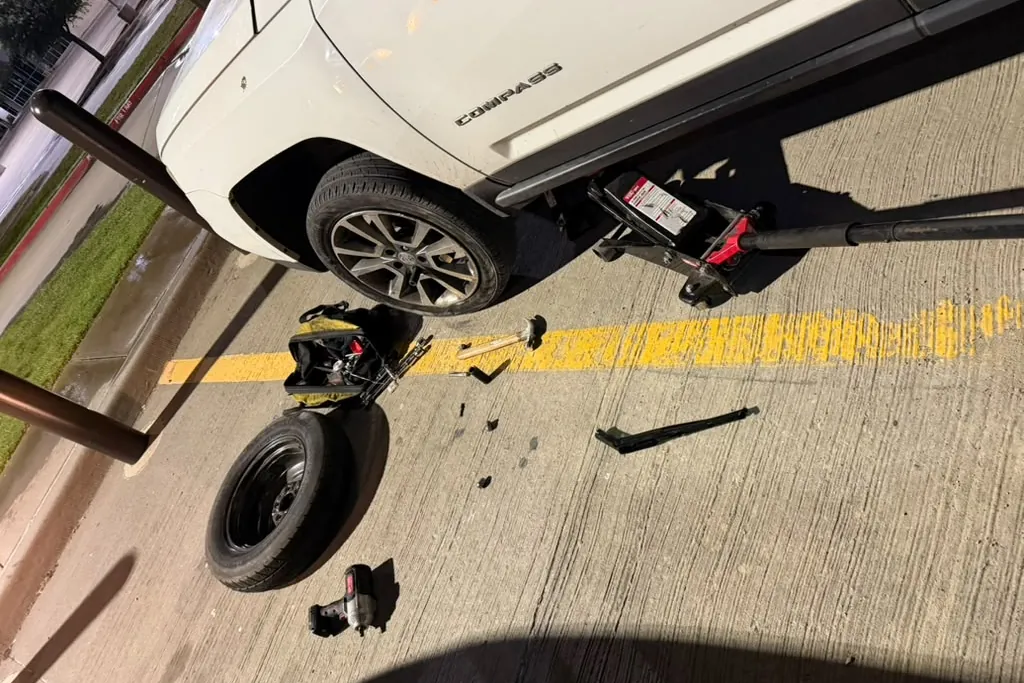
If the shoulder is too tight to work on safely, expect the technician to suggest moving the car first. A tire change beside traffic at tollway speed isn't worth the risk.