Updated · Safety on the road
Get off the road, not just onto the shoulder
As soon as something feels wrong, turn on your hazard lights and signal right. If the car still moves, aim for the next exit, a gas station or a parking lot. Ease off the gas gradually instead of braking hard.
If you can't make an exit, pull as far right onto the shoulder as the car will go. Avoid stopping on a curve, just past the top of a hill, or on a bridge with no shoulder. If you're in the far-left lane and can't get right safely, a wide left shoulder beats cutting across traffic.
If the car stops in a travel lane
Keep your seat belt on, leave the hazards on, and call 911. A car stalled in a lane puts everyone at risk, and police can protect the scene and slow traffic. Don't get out to push the car or look under the hood while traffic is passing.
Leave the car only if you see smoke or fire, or you're sure you can reach a safe spot away from traffic without walking in a lane.
On the shoulder: stay in or get out?
It depends on where you are. If there's a guardrail or a grassy slope with room to stand well away from the road, getting out on the side away from traffic and waiting behind the barrier is usually safer. If the shoulder is narrow, with a wall on one side and traffic on the other, staying belted inside is often the better choice.
- Get out on the passenger side, away from traffic.
- Wait behind the guardrail and up the slope, not next to the car.
- Bring your phone, water and everyone else in the car with you.
- Never cross the highway on foot to reach help.
Call for help with clear details
Give the highway, your direction, and the last exit or mile marker you passed, or share a pin from your phone's map. Then describe the problem: a flat, a car that won't start, a warning light.
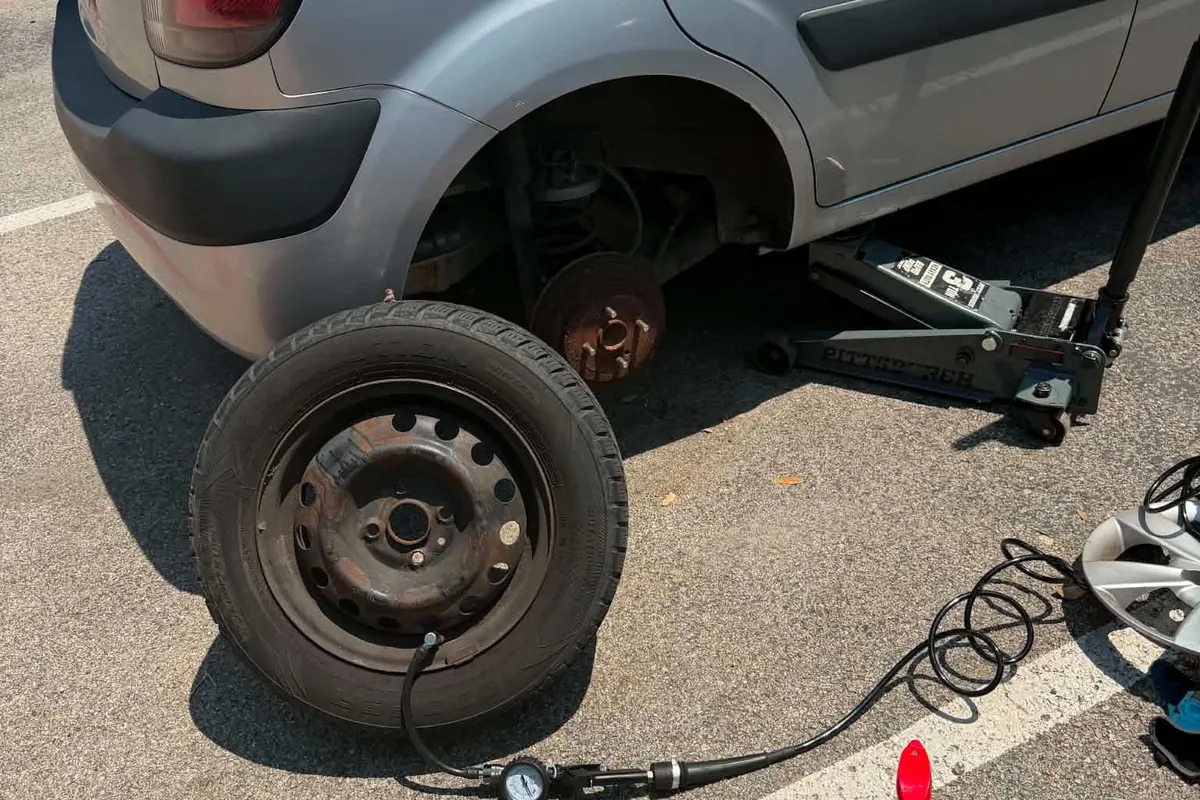
For a flat, don't change it yourself beside moving traffic. If the next exit is close, reaching it slowly with hazards on is usually safer than a narrow shoulder, even if the tire is ruined.
Don't expect traffic to move over for you
Texas's Move Over or Slow Down law protects police, tow trucks, highway crews and certain other work vehicles with flashing lights, but not an ordinary car stopped with its hazards on. Plan as if traffic won't give you room: stay off the traffic side of the car, and never stand behind it.